Hans-Hermann Hoppe: A Key Figure in Libertarian Thought

Hans-Hermann Hoppe, a prominent figure in the world of Libertarianism, has made significant contributions to the ideology through his writings and ideas. Born in Germany in 1949, Hoppe is renowned for his insightful analysis of economics, politics, and human behavior. Let’s explore why he is considered important to Libertarianism and how his ideas have shaped the movement.

Early Life and Education

Hoppe’s intellectual journey began at the University of Saarland, where he studied philosophy, sociology, and economics. He later earned his Ph.D. in philosophy from the Goethe University in Frankfurt. His academic background equipped him with the analytical tools and theoretical framework to engage with complex issues related to liberty, property rights, and governance.

Contributions to Libertarian Thought

Hoppe’s work spans a wide range of topics, but he is perhaps best known for his contributions to the field of Austrian economics and his advocacy for private property rights and individual freedom. His writings delve into the ethical and economic foundations of Libertarianism, offering insightful critiques of government intervention and advocating for a more decentralized and voluntary society.

The Importance of Property Rights

One of Hoppe’s central arguments is the importance of property rights as the foundation of a free society. He argues that individuals have a natural right to own and control their property, whether it be land, goods, or intellectual creations. According to Hoppe, the recognition and protection of property rights are essential for fostering economic prosperity, social harmony, and personal autonomy.

Critique of Democracy

Hoppe is also known for his critique of democracy and centralized government. He argues that democratic governments tend to expand their power at the expense of individual liberties, leading to inefficiency, corruption, and the erosion of civil society. He advocates for decentralization and secession as means of limiting state power and promoting local autonomy.

Theory of Argumentation Ethics

Hoppe’s theory of argumentation ethics provides a philosophical justification for Libertarian principles. He argues that the act of engaging in rational discourse presupposes certain norms, such as the principle of non-aggression and respect for property rights. From this perspective, Libertarianism is not just a matter of preference but a logical consequence of ethical reasoning.

Influence on the Libertarian Movement

Hoppe’s ideas have had a profound impact on the Libertarian movement, inspiring scholars, activists, and advocates around the world. His writings have sparked lively debates and discussions within the Libertarian community, challenging conventional wisdom and pushing the boundaries of economic and political theory.

Controversies and Criticisms

While Hoppe’s contributions to Libertarianism are widely acknowledged, he has also faced criticism for some of his controversial statements and associations. His views on immigration, multiculturalism, and democracy have sparked controversy and led to accusations of racism and xenophobia from some quarters. However, Hoppe’s defenders argue that his ideas should be evaluated on their merits, rather than dismissed based on ideological differences or personal attacks.

Conclusion

In conclusion, Hans-Hermann Hoppe occupies a unique and influential position in the world of Libertarian thought. His rigorous analysis, bold ideas, and commitment to individual freedom have earned him a place among the most respected voices in the movement. While his work continues to inspire and challenge, it also serves as a reminder of the enduring relevance of Libertarian principles in today’s complex and ever-changing world.


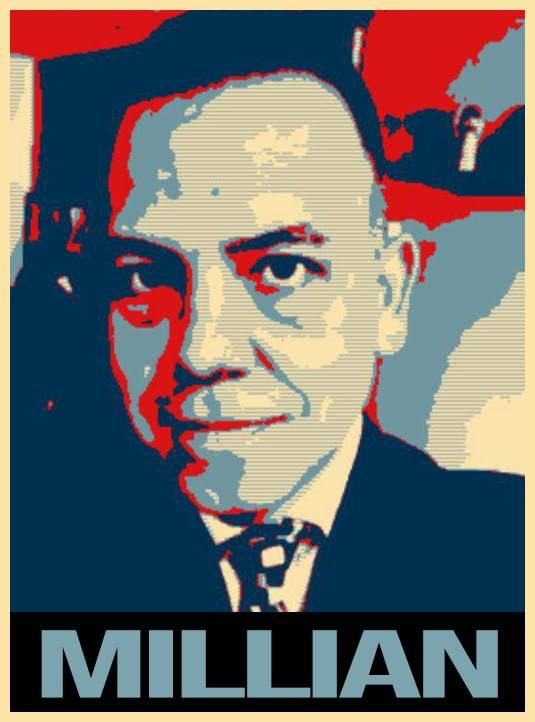
Vote Millian for Assembly 3 Nevada

Vote Millian for Assembly 3 Nevada

In recent years, there has been a growing sense of disillusionment with the two major political parties in our country. Many people feel trapped in a cycle of partisan gridlock and ideological polarization, where compromise and progress seem like distant dreams. But there is a way out of this political quagmire, and it starts with embracing third-party candidates in local elections.

Breaking the Duopoly

For too long, our political system has been dominated by two major parties, each vying for power and influence at the expense of genuine representation and accountability. But as dissatisfaction with the status quo grows, more and more voters are realizing that there is another option: third-party candidates who offer fresh perspectives and alternative solutions. Read more

Vote Millian Quinteros, Libertarian, NV Assembly 3

Vote Millian Quinteros, Libertarian, NV Assembly 3

When we think about politics, it’s easy to get caught up in big national debates and issues. But what about the decisions that affect us right in our own neighborhoods? That’s where local politics come in, and for Libertarians, they have a lot to say about it. Let’s dive into the Libertarian perspective on local politics and how these decisions shape our daily lives.

Local Decision-Making

Local politics covers everything from city council meetings to school board elections. It’s where decisions are made about things like zoning laws, public services, and local budgets. For Libertarians, local decision-making is crucial because it’s often the closest level of government to the people.

They believe that decisions about our neighborhoods and communities should be made by the people who live there, not by politicians far away in a distant capital. This means that local governments should have more power to make their own rules and policies, tailored to the needs and values of their community.

Read more

Nevada Elections 2024 - Millian (L) for NV Assembly 3

Nevada Elections 2024 – Millian (L) for NV Assembly 3

When we talk about Libertarians, we’re talking about folks who really believe in freedom—especially when it comes to the economy. But what does that mean for how things work at the local and state levels? Let’s break it down in a way that makes sense.

Local Economic Freedom

Imagine your neighborhood—there are small businesses, stores, and maybe even a farmer’s market. For Libertarians, local communities are where economic freedom begins.

Libertarians think that people should be able to start their own businesses and make money without the government getting too involved. They say that local rules and regulations should be fair and simple, so it’s easier for people to start businesses and sell things they make.

For example, if someone wants to sell homemade crafts at the local market, Libertarians think they shouldn’t have to deal with a ton of rules and paperwork. They believe in making it easier for people to follow their dreams and make a living.

Read more

Nevada 2024 - Maximillian Quinteros, LIbertarian, Assembly 3

Nevada 2024 – Maximillian Quinteros, LIbertarian, Assembly 3

Imagine a world where everyone respects each other’s rights and freedoms, where people live without fear of violence or coercion. This vision lies at the heart of Libertarianism, a political philosophy that champions the principle of non-aggression as a cornerstone of a just and free society.

So, what exactly does non-aggression mean from a Libertarian viewpoint? Let’s break it down.

At its core, non-aggression is about the idea that individuals should not initiate force or coercion against others. In other words, it’s the belief that people should live peacefully and interact with each other voluntarily, without resorting to violence, fraud, or manipulation.

For Libertarians, non-aggression is more than just a moral principle—it’s a practical approach to organizing society. They believe that when people are free to make their own choices and live their lives as they see fit, society as a whole benefits.

Think of it like this: imagine a group of friends hanging out together. Each person has their own preferences, interests, and goals. In a Libertarian society based on non-aggression, everyone respects each other’s space and rights. They might disagree on things, but they find ways to resolve their differences peacefully, without resorting to force or coercion.

Read more

NV AD-3, Millian, Libertarian, 2024

NV AD-3, Millian, Libertarian, 2024

Imagine you’re on a playground full of kids, each doing their own thing, playing games, and having fun. Now, let’s think about one of those kids, let’s call him Alex. Alex is a Libertarian. But what does that mean?

Well, being a Libertarian on the playground means Alex believes in something called freedom. He thinks everyone should have the right to do what they want, as long as they don’t hurt anyone else. It’s like saying, “You do you, and I’ll do me.”

On the playground, Alex doesn’t like it when someone tells him what game to play or how to play it. He wants to make his own choices and have the freedom to do things his way. Maybe he wants to play basketball while someone else wants to play tag—that’s okay with him!

Read more

Maximillian "Millian" Quinteros, Libertarian for NV Assembly 3

Maximillian “Millian” Quinteros, Libertarian for NV Assembly 3

First principles problem-solving is a fascinating concept that involves breaking down complex problems into their fundamental components and building solutions from scratch. It’s like going back to basics to figure things out in a logical and systematic way.

Imagine you’re faced with a tough problem that seems overwhelming at first glance. Instead of relying on past solutions or following what others have done, first principles problem-solving encourages you to strip away assumptions and get to the core of the issue.

Here’s how it works: you start by identifying the fundamental truths or facts that underpin the problem. These are your “first principles.” For example, if you’re trying to build a better smartphone, your first principles might include understanding the basic components of a phone, like the screen, processor, battery, and so on.

Once you’ve identified these first principles, you can use them as building blocks to generate new ideas and solutions. This might involve asking questions like, “What is the purpose of each component?” or “Is there a better way to achieve this function?”

Read more

Vote Millian for NV Assembly 3

Vote Millian for NV Assembly 3

In the realm of political philosophy, Libertarianism stands out for its emphasis on individual freedom and limited government intervention. Central to this ideology is the concept of “first principles,” which serves as its philosophical foundation. Let’s explore how first principles shape Libertarian beliefs.

First principles are basic truths or assumptions that form the groundwork for reasoning and decision-making. In Libertarianism, these principles revolve around the idea of inherent rights and non-aggression. Libertarians assert that every individual possesses certain natural rights, such as life, liberty, and property, which are not granted by the government but are intrinsic to human nature.

At the core of Libertarianism lies the principle of individual liberty. Libertarians advocate for maximum personal freedom, provided that individuals do not infringe upon the rights of others. They believe in the concept of self-ownership, which emphasizes personal responsibility and voluntary association.

Read more