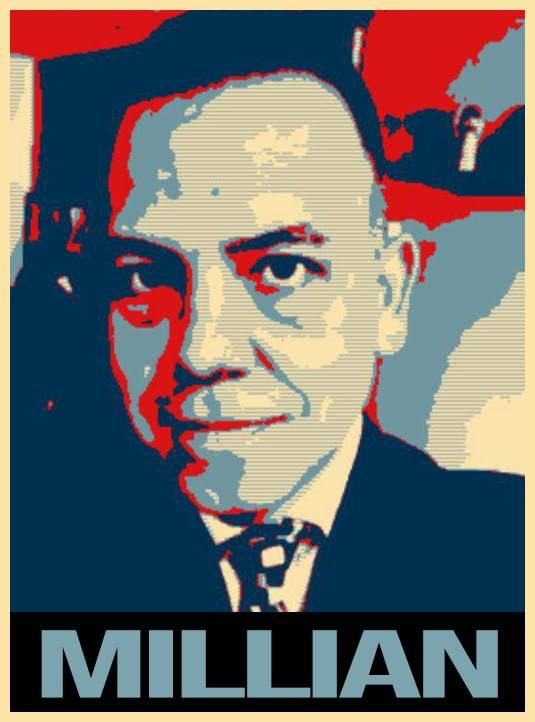
Who is Ludwig Von Mises?
Ludwig von Mises: A Pioneer of Libertarian Economics
Ludwig von Mises, a towering figure in the field of economics, is revered as one of the founding fathers of Libertarianism. Born in 1881 in Austria-Hungary, Mises made profound contributions to economic theory, political philosophy, and the defense of individual liberty. Let’s explore why Mises is considered pivotal to Libertarianism and how his ideas have shaped the movement.
Early Life and Education
Mises began his academic journey at the University of Vienna, where he studied economics and law under the tutelage of renowned scholars such as Eugen von Böhm-Bawerk and Friedrich von Wieser. He later earned his doctorate in economics and embarked on a distinguished career as a scholar and educator.
Contributions to Libertarian Thought
Mises’ magnum opus, “Human Action,” published in 1949, laid the foundation for the modern Austrian School of economics and established him as a leading figure in the field. In “Human Action,” Mises expounded upon the principles of praxeology—the study of human action—and demonstrated how economic phenomena arise from individual choices and preferences.
Advocacy for Free Markets
Central to Mises’ philosophy is the belief in the superiority of free markets and the importance of individual freedom. He argued that government intervention in the economy, whether through price controls, regulations, or central planning, distorts market signals and leads to inefficiency, malinvestment, and economic stagnation.
Defense of Individual Rights
Mises was a staunch defender of individual rights and the rule of law. He believed that individuals have the natural right to life, liberty, and property, and that government should exist solely to protect these rights. Mises’ advocacy for limited government and the rule of law laid the groundwork for his broader critique of statism and collectivism.
Influence on the Libertarian Movement
Mises’ influence on the Libertarian movement cannot be overstated. His writings and teachings inspired a generation of economists, scholars, and activists to embrace the principles of free markets, individual liberty, and limited government. Through his work at the Austrian School of Economics and the Foundation for Economic Education, Mises played a pivotal role in disseminating Libertarian ideas and shaping public discourse on economic policy.
Legacy and Impact
Mises’ intellectual legacy continues to resonate in academic circles and public policy debates. His ideas have informed discussions on monetary theory, business cycle theory, and the role of government in the economy. While Mises faced criticism and opposition from mainstream economists and policymakers during his lifetime, his contributions to economic theory and political philosophy have stood the test of time and remain as relevant today as ever.
Conclusion
In conclusion, Ludwig von Mises stands as a pioneer of Libertarian economics, whose insights and ideas continue to inspire and inform scholars and practitioners around the world. His unwavering commitment to individual freedom, coupled with his rigorous analysis of economic phenomena, has left an indelible mark on the Libertarian movement and contributed to a deeper understanding of the principles of liberty, prosperity, and human flourishing. As we confront the challenges of the 21st century, Mises’ vision of a free and prosperous society serves as a beacon of hope and inspiration for all who cherish the values of freedom and individual autonomy.